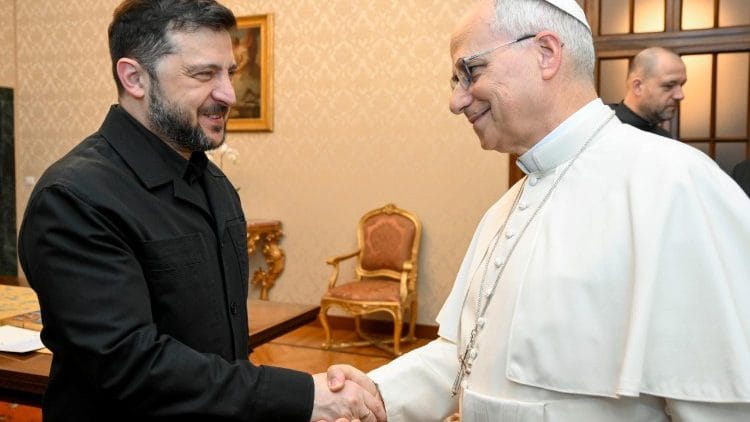
Pope Leo XIV has accepted the resignation of Cardinal Giovanni Battista Re as Dean of the College of Cardinals and approved the election of Filipino Cardinal Luis Antonio Tagle as his successor.
The decision marks a change in the leadership of the College of Cardinals, the body whose members advise the Pope and play a central role in the election of a new pontiff when the papacy becomes vacant.
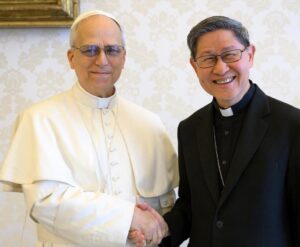
Cardinal Re, who has served as dean since January 2020, assumes the title of Dean Emeritus. Cardinal Tagle’s election was approved by Pope Leo XIV, completing the canonical process required for the appointment.
Cardinal Giovanni Battista Re, an Italian prelate and longtime official of the Roman Curia, became dean following the resignation of Cardinal Angelo Sodano in 2019. His election was approved by Pope Francis in January 2020.
During his tenure, Cardinal Re presided over the College of Cardinals in his capacity as dean. The position carries particular responsibilities in the college’s formal proceedings and during the period surrounding a papal vacancy.
The dean does not exercise authority over the other cardinals comparable to that of the Pope. Instead, the office serves a specific function within the Church’s established canonical structure.
Following the latest announcement, Cardinal Re retains the title of the suburbicarian Church of Sabina-Poggio Mirteto and becomes Dean Emeritus.
Born in Manila on June 21, 1957, Cardinal Tagle was ordained a priest in 1982. He was appointed Bishop of Imus in 2001 and became Archbishop of Manila in 2011. Pope Benedict XVI elevated him to the College of Cardinals on November 24, 2012.
Tagle later moved into senior Vatican leadership. Pope Francis appointed him prefect of the Congregation for the Evangelization of Peoples in December 2019. Following the reform of the Roman Curia, he became Pro-Prefect of the Dicastery for Evangelization in 2022.
His responsibilities have included overseeing work related to evangelization and the establishment and development of local Churches, particularly in territories where the Catholic Church continues to expand its presence.
The dean occupies a senior position within the College of Cardinals, but the office is distinct from the papacy and does not confer supreme governing authority over the Catholic Church.
Under Canon 352 of the Code of Canon Law, the dean is elected by the cardinals who hold titles to suburbicarian churches, with the election submitted to the Pope for approval.
The dean has particular responsibilities in convening and presiding over meetings of the College of Cardinals. During a papal vacancy, the dean also has a role in communicating the news of the Pope’s death to the diplomatic corps accredited to the Holy See and to the heads of state concerned, as provided by canon law.